Over the past 10 years I’ve played a lot of games, some good, some bad, and some that I really want to talk about. This post is about the latter, the games which were so good that I felt the need to share what they are and why I like them so much.
While there will be a few games on this list that you’ve probably heard of before; I’ve also included some games that I really enjoyed and want to draw attention to.
Crosscode
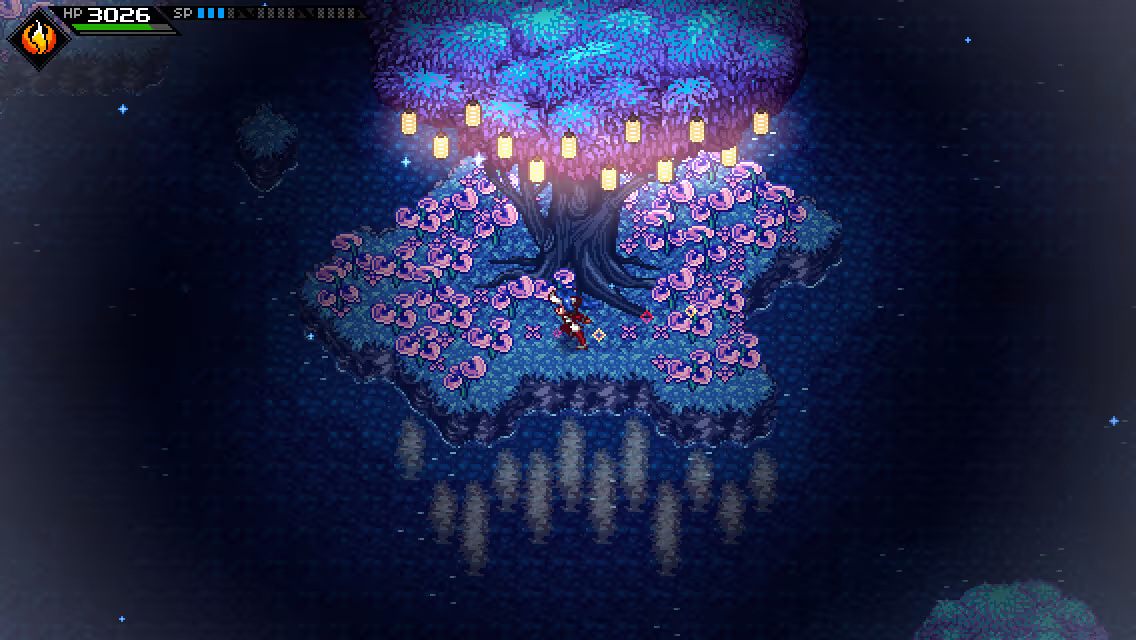
A 2018 action role-playing game, Crosscode suprised me in a number of ways. The pixel art is stunning, the combat deeply engaging, and the story interesting enough to keep you playing. I’ve always been a fan of the idea of MMOs, growing up I begged my parents to buy me game time for World of Warcraft, and when they kept turning me down I saved up money to buy Guild Wars 2 and play that instead. But while I’ve always enjoyed the progression, storytelling, worldbuilding and social aspects of these games - I never truly fell in love with any of them. I think this is largely because I never truly got into the community aspects of these games, at the time I was very young (~10 years old) and not many 10 year olds I knew were playing WoW or GW2.
So when I finally played Crosscode I found myself really resonating with the protagonist Lea; a character who initially avoids interactions with strangers as she doesn’t have the ability to speak; and as she finds herself in this MMO world she is forced to forge her own path. The story of her overcoming her inability to speak and forge friendships with others was one that I didn’t think I would find touching - but in the end ended up resonating with me more than I could imagine.
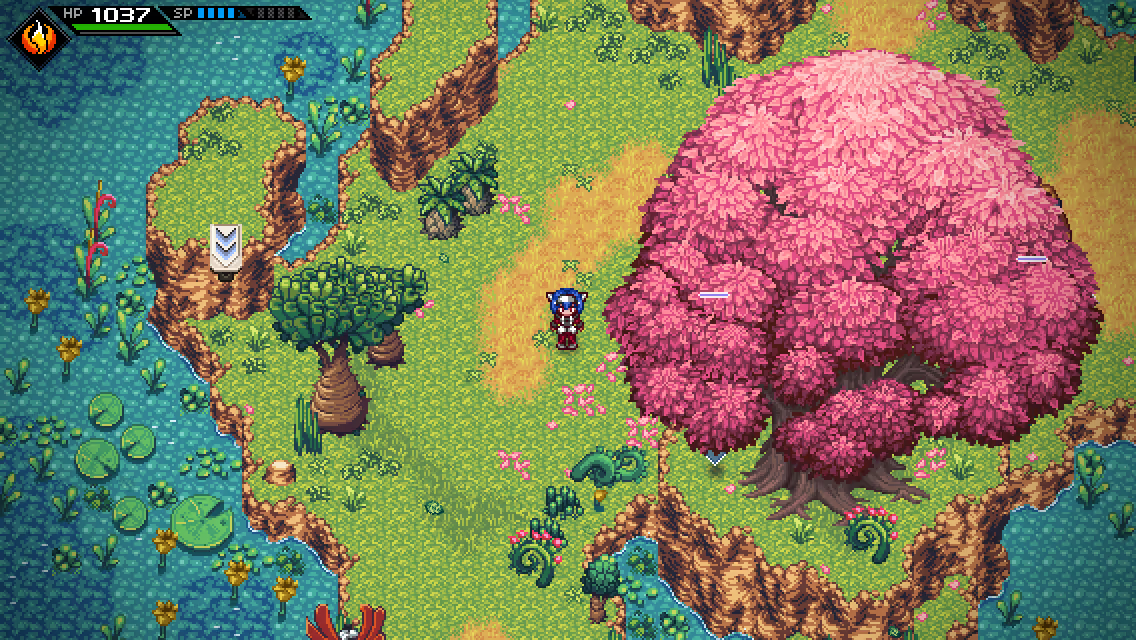
I’m also a gigantic sucker for pixel art. I grew up playing pixel art games, and I’ve found as I’ve gotten older that not only do I appreciate the art direction of those games, but also how gracefully they’ve aged compared to other games released at the same time. While Crosscode certainly wasn’t released in the golden age of pixel art games; it’s clear that the developers, Radical Fish Games, spent an inordinate amount of time and effort crafting a truly beautiful game. This is a game whos art will truly stand the test of time - and in thirty years time will look as good then as it does today.
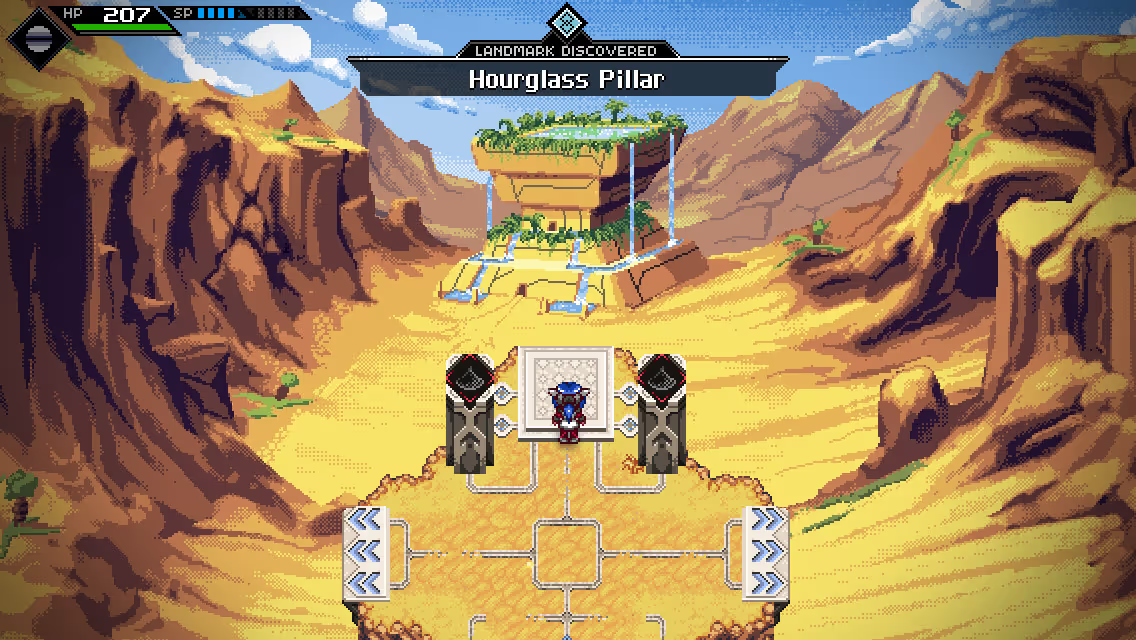
The combat system is also incredibly deep and rewarding, and is very, very, fast-paced. As you play through the game you unlock different elemental modes which can be swapped to at any time with a press on the D-Pad, enemies have different weaknesses and resistances, and you’re limited in your ability to stick to one element - as overusing a single element will cause Lea to ‘overheat’ and lose access to combat arts associated with each element. Combat Arts are essentially abilities you unlock as you level up and sink points into each elements respective ability tree. They’re your primary source of damage so the system ends up heavily incentivizing rapidly switching between elements, casting your abilites and then switching to a different element.
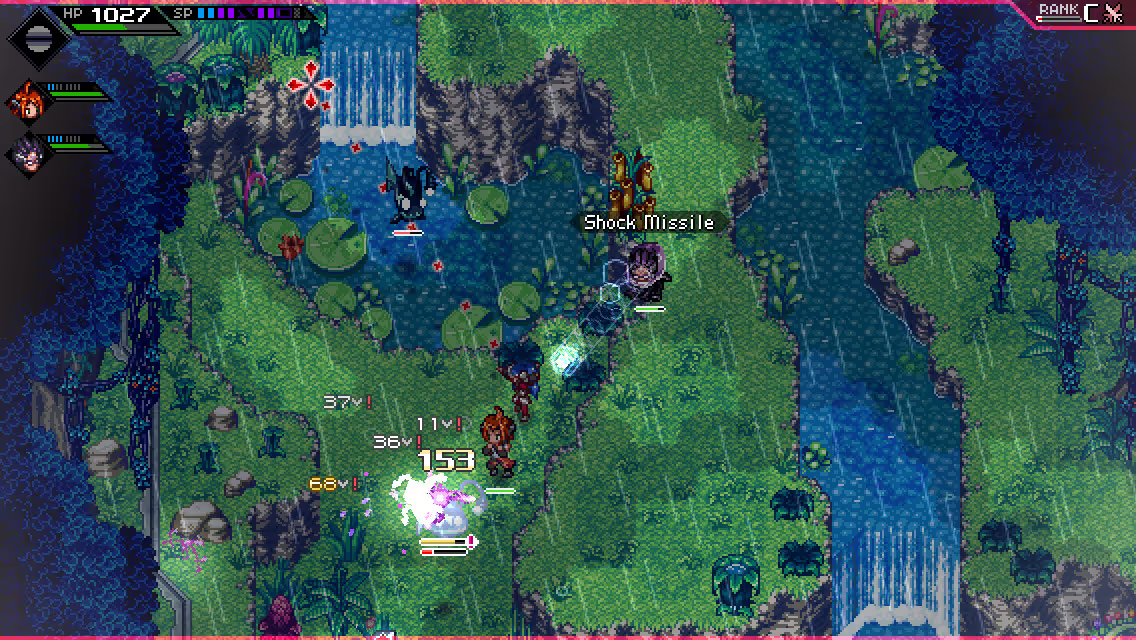
As you kill enemies during combat, a bar in top-left of the screen begins filling up, and increments from Rank D up to Rank S, if you stay out of combat for too long you drop down back to Rank D, and as you increase the rank, more enemies spawn and their drop rates increase. If you make it all the way to Rank S the music changes, and the combat becomes particularly intense as you’re flooded with additional enemies to defeat. This system further adds to the fast-paced nature of the combat, and greatly rewards you from staying in combat for as long as possible.
So far I’ve been talking very highly about this game, and if you haven’t already heard of Crosscode, you’re probably wondering why you haven’t already. This really comes down to two factors in my opinion - the length of the game and the puzzles. On How Long to Beat, Crosscode’s main story comes in 35.5 hours, with Main + Extra and Completionist taking 54.5 and 79 hours respectively. For a singleplayer game, that’s a long time to beat the game (especially when it was released - games are getting much longer nowadays). To put that into perspective, Chrono Trigger, which I think inspired Crosscode in many ways, takes 23 hours to beat the main story and 42.5 hours for a completionist run. As much as I love Crosscode, Chrono Trigger is an objectively better game in almost every way - and I’m sure would be enjoyed by a much wider group of people, so for someone to really enjoy Crosscode they need to really resonate with Crosscode, or there’s a high likelihood they’ll end up getting bored towards the end.
But I also mentioned the puzzles, and I think this in combination with the length is what really ruins the game for some. For context, I love puzzles in video games, and you can tell the Crosscode developers do too, as there’s plenty of them. Every time you unlock a new element to switch to for combat is at the end of some long Zelda-esque dungeon filled with puzzles interspersed with combat. Aside from the final boss at the end of each dungeon, these dungeons are probably 90% puzzles and 10% combat, which poses a bit of a problem because…
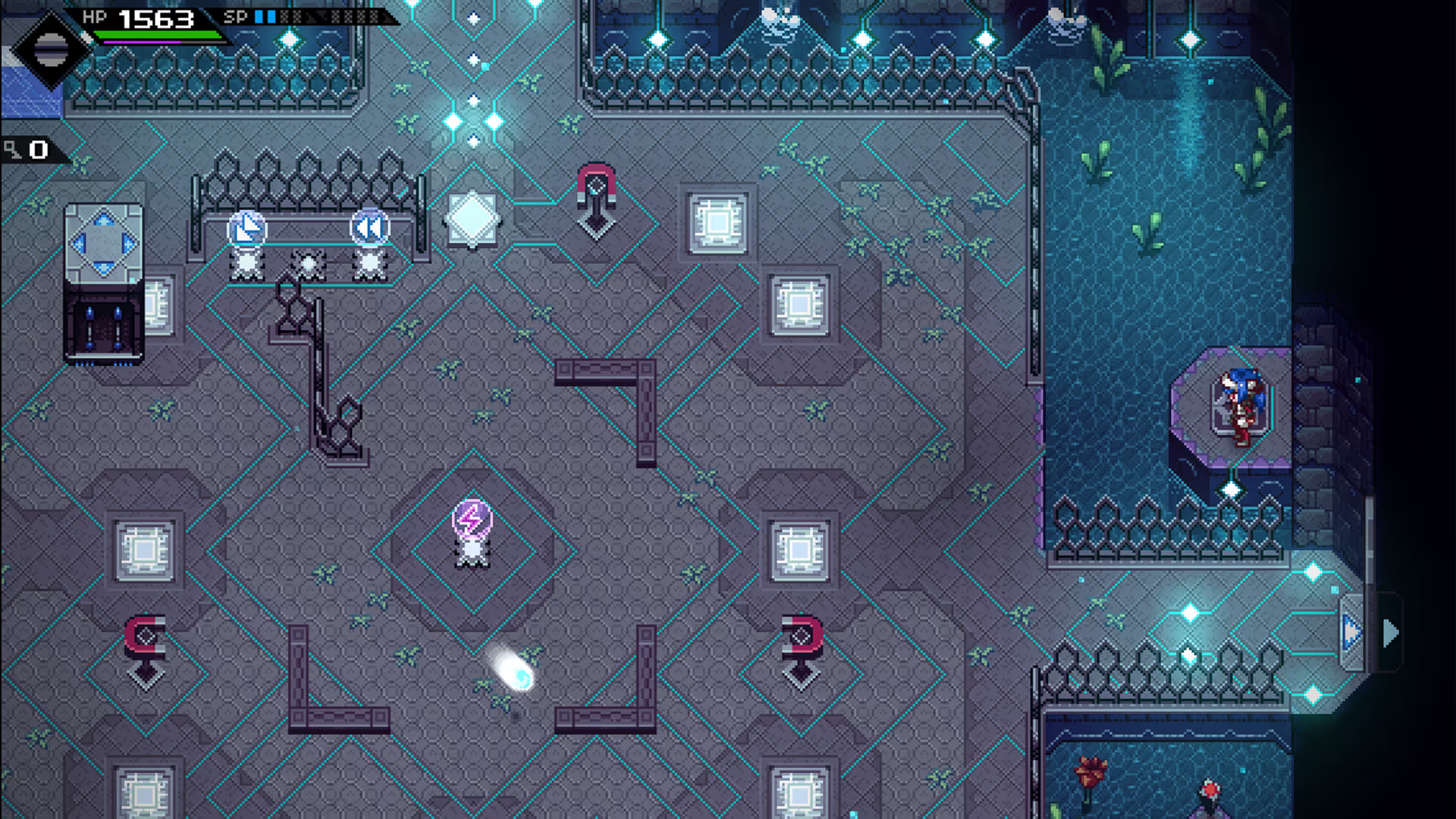
The puzzles aren’t exactly incredible, most are very simple, and the more complex ones rely less on the difficulty of solving the puzzle and more on the difficulty of hitting a series of time gates to complete the puzzle, swapping between elements and completing time-gated checks that if you mess up, require starting from the beginning again. I think for most of the game, the player can look past these, as the dungeons are infrequent enough and short-enough that generally speaking they won’t be an issue. However there is one point in the game where the player is tasked with completing three dungeons back-to-back that is particularly agregious. I think this was a massive oversight by the developers, as looking online1 it seems this is a particularly common complaint. My only advice if you play this game is make sure you don’t do what I did and complete all the side-quests as you receive them, as if you do you’ll have nothing to intersperce these dungeons with and it makes it a ten-times worse slog to get though.
That all being said, I still think this game is worth playing, and I’ll definitely end up playing it again some point even if facing the prospect of those dungeons again does intimidate me. The rest of the game is so good, that I can personally overlook the developers transgressions with that area of the game.
Dark Souls
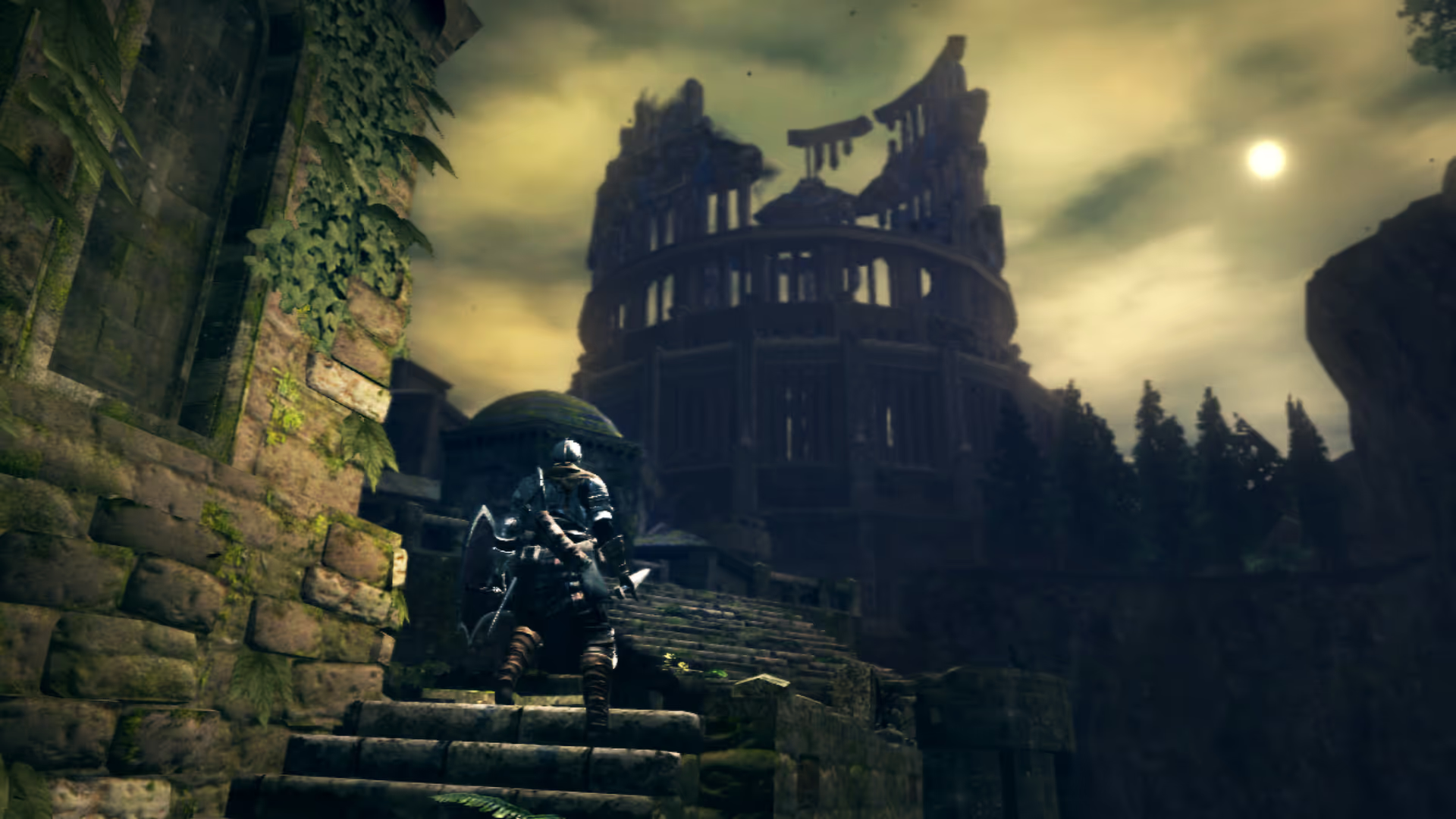
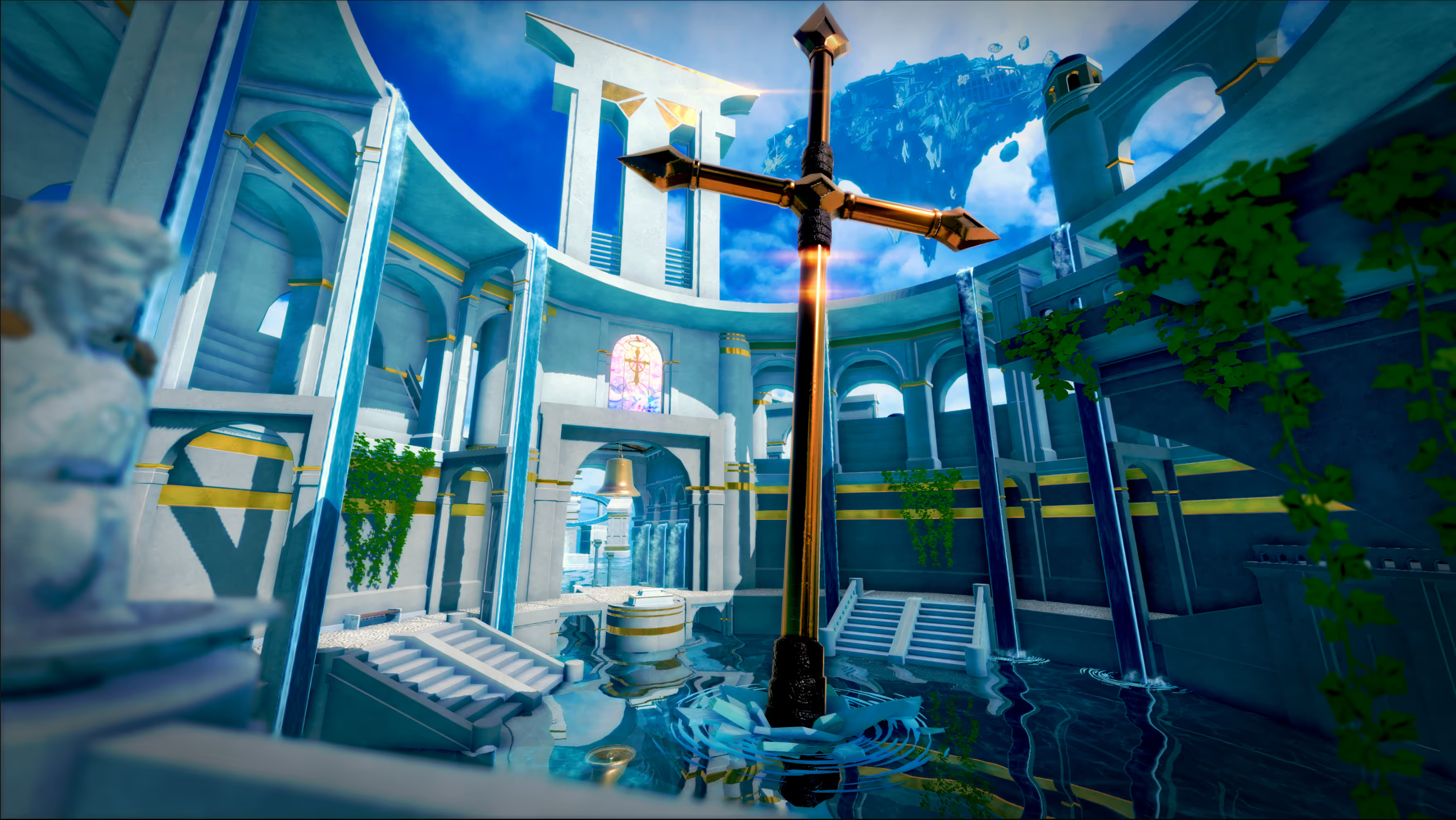
I don’t think I’ll ever forget my first playthrough of Dark Souls, the sense of wonder and intrigue as I traversed the map will forever make me wish I could play that game for the first time again. The journey of the souls-like genre has been a very interesting one, FromSoftware’s games didn’t exactly reach critical success or even pull very good sales numbers when they initially released; Dark Souls set itself as a very niche game that makes no attempts to water-down the experience in hopes of being more broadly accessible. When Dark Souls initially came out, companies like Nintendo, Sony and other big game publishers were developing increasingly accessible games in the hopes of reaching a wide market - which while was undeniably a successful strategy, it also ended up with its fair share of critics that disliked the trajectory that video games were moving along.
It’s perhaps the complete rejection of these philosphies that makes Dark Souls such an interesting game. You, the player wake up in a jail cell knowing nothing about yourself and with no characters in sight to guide you or give you any sort of purpose, you just begin wandering the corridors while being attacked by hollowed creatures whose humanity has long since abadoned them, just trying to make sense of where you are and what your goal is. Eventually, you’ll stumble across the main hub of the game, Firelink Shrine, where you meet a character who tells you that you must ring the Bells of Awakening, one located far below where you currently stand and the other far above. With nothing else to go off you pick a direction and hope for the best.
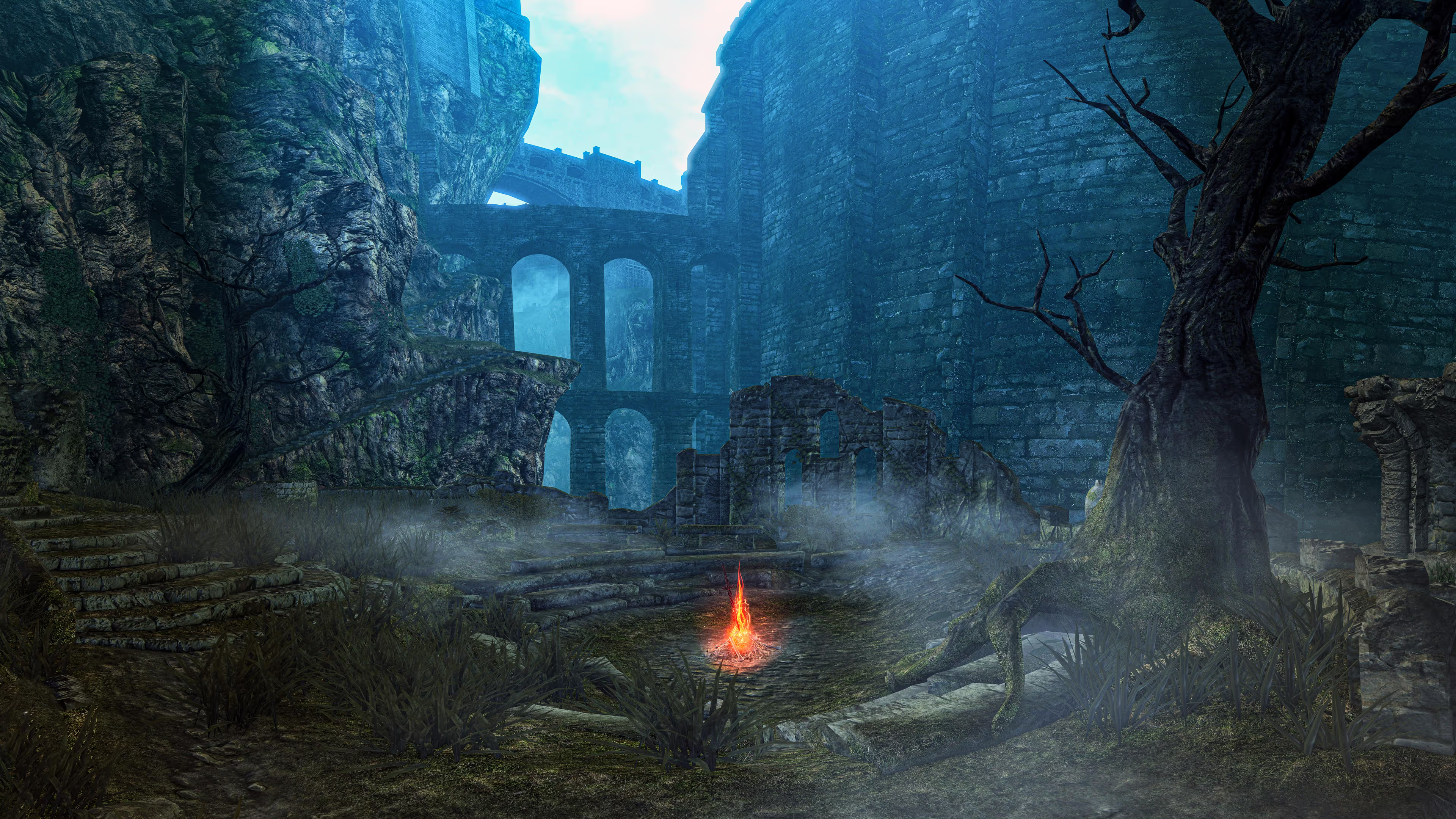
Dark Souls shines through its understanding that the player is not dumb; objective markers are not needed, exposition dumping is not needed, a tutorial on the combat system is not needed. If you play any modern release from a triple A publisher today they will feature all three of those things, and their games will be much more commercially succesful for it, but also much more boring. This is the reason Dark Souls became successful enough to spawn its own genre, and its the reason that FromSoftware’s games have achieved such a broad, cult-like following.
The strucutre of the map layout is also incredibly interesting; rather than have a linear path for the player to follow, Dark Souls’ map twists and loops back in on itself in an almost labyrinthine manner, making it easy to get lost, or end up in an area you’re definitely not supposed to be in yet. Importantly, for a large portion of the game, there is no fast-travel, and with bonfires (the games checkpoint system), being placed far apart, the game forces the player to learn the map by heart.
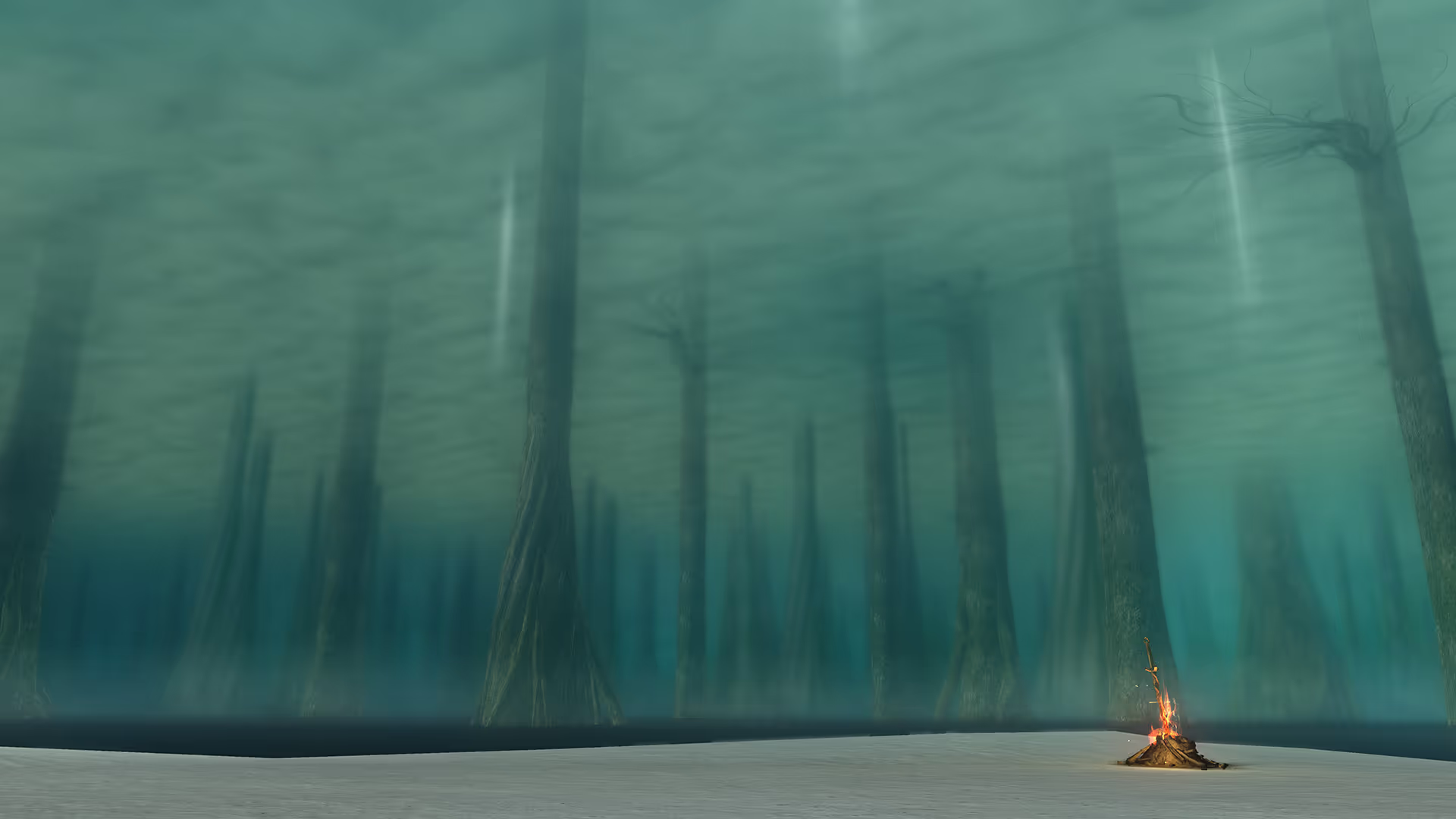
When you arrive in Firelink Shrine you have the option to either go up to the Undead Parish or down into the Catacombs; Dark Souls will let you do both, although if you try to go one of the ways you’ll quickly find the enemies very difficult to defeat, hinting to the player that maybe they shouldn’t go that way yet. But the beauty of Dark Souls is that you can go that way, you can slowly and methodically wear down the enemies or run straight past them - the choice is entirely yours. Where other games would have some annoying NPC blocking you, or some equally dumb exposition reason like ‘a big tornado picks up your ship and plonks it back down somewhere else’2, Dark Souls says fuck it, if a player goes there and gets trapped and dies over and over again, that’s their own fault and their own choice to make.
It’s hard to communicate how that decision makes such a big difference to the sense of exploration. Unlike in other games where when I see a cool place I know the developers have deliberately gone out of their way to show me that cool place, in Dark Souls when I find it I’m struck by an unrivalled sense of awe. If you’ve played Elden Ring, you may have had a similar feeling when taking an elevator down into the earth that when you used it for the first time you probably thought ‘how long is this elevator ride going to be?!?‘. From Software games are filled with that feeling that I’ve failed to find in any other game to date, and out of all of From Software’s games, I feel as though Dark Souls captures that feeling better than any other.
Neon White
When I was younger I played a lot of CSGO Surf and B-hop maps, I’ve always loved games where there is a key focus on the player’s movement or rewards the player for having good movement. Over time however, despite players love for these mechanics, we’ve seen a decrease in games that make use of odd quirks to allow interesting movement tech. I think this is largely due to the game development industry condensing into fewer and fewer game engines. Twenty years ago it was commonplace for game development companies to build their own inhouse game engine; which resulted in their being much more game engines, and much greater potential for bugs in said engines.
These bugs often resulted in interesting movement tech, such as the aforementioned surfing and b-hopping courtsey of the Source engine, however now as every developer seems to use Unreal Engine these days you see them with much less frequency. In response the genre of Parkour games have become much more popular, and Neon White is one such game to enjoy success within this genre.
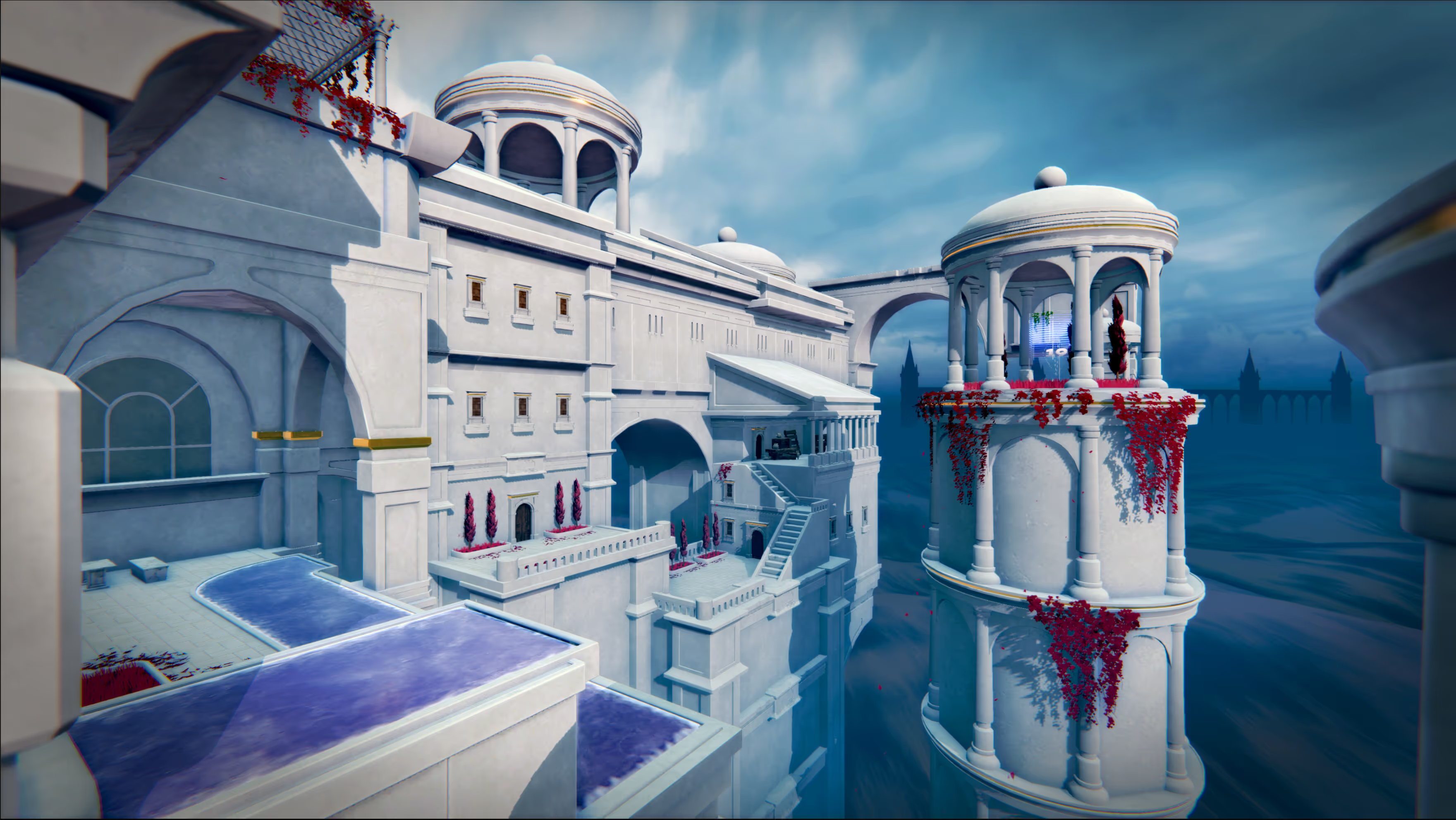
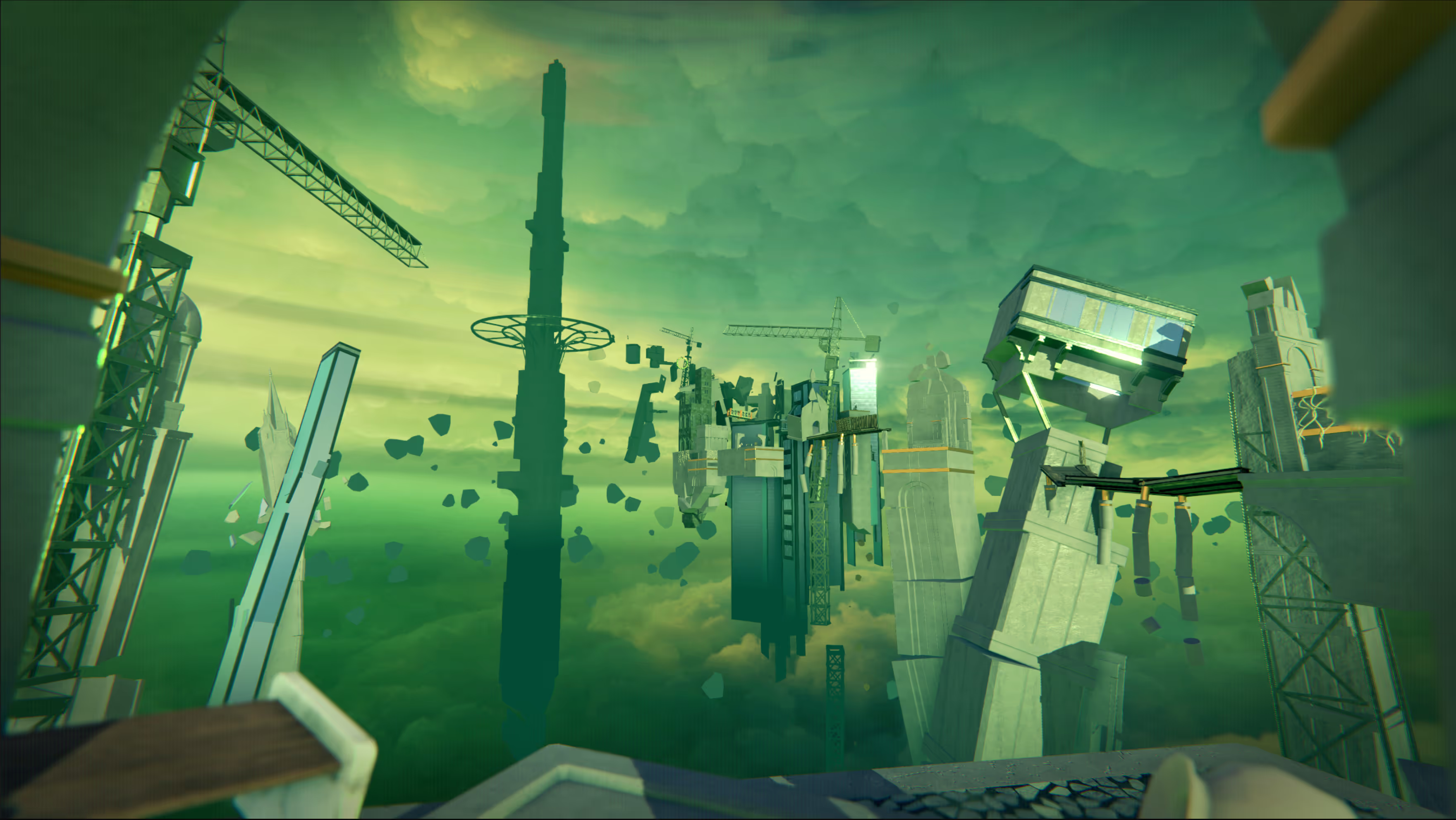
What makes Neon White special? Well aside from the movement system feeling spectacular to interact with, the music being fantastic and the environmental design beautiful, not much. But that’s all you really need to make a phenomenal game, and Neon White shows how as long as the systems you do include are really good, you can get away with having less (or not even having anything particularly unique). The only truly unique element of Neon White is that the movement system introduces a card-based ability system, where you pick up cards off the ground that can then be consumed to use a certain ability relevant to that card.
The dance of gliding across surfaces, defeating enemies, dashing between walls, all while picking up and using cards is a truly entracing experience. If you love movement in video games, you’ll fall in love with Neon White as I did.3 Neon White’s other interesting feature is that every level you complete is timed and scored on a global leaderboard automatically, but by default it only shows your time compared to your other Steam friends. If you’re like me and have a competitive side, you’ll spend countless hours redoing stages to get yourself to the top of your friends leaderboard, which only makes the game that much more fun.
Hollow Knight
I found out about Hollow Knight shortly after it launched, the year prior I had played through Dark Souls III, and was looking for more souls-like games when I came across Hollow Knight. Hollow Knight was quite popular inside the souls-like and metroidvania communities, but outside of that, hadn’t reached the popularity that it enjoys today. I decided to give it a go, despite my experience with metroidvania’s and really 2D platformers in general being fairly limited before this point. My journey through Hallownest was one of the greatest experiences I’ve had in gaming, and one that I think everyone should embark upon regardless of how you feel about about 2D platformers or metroidvanias.
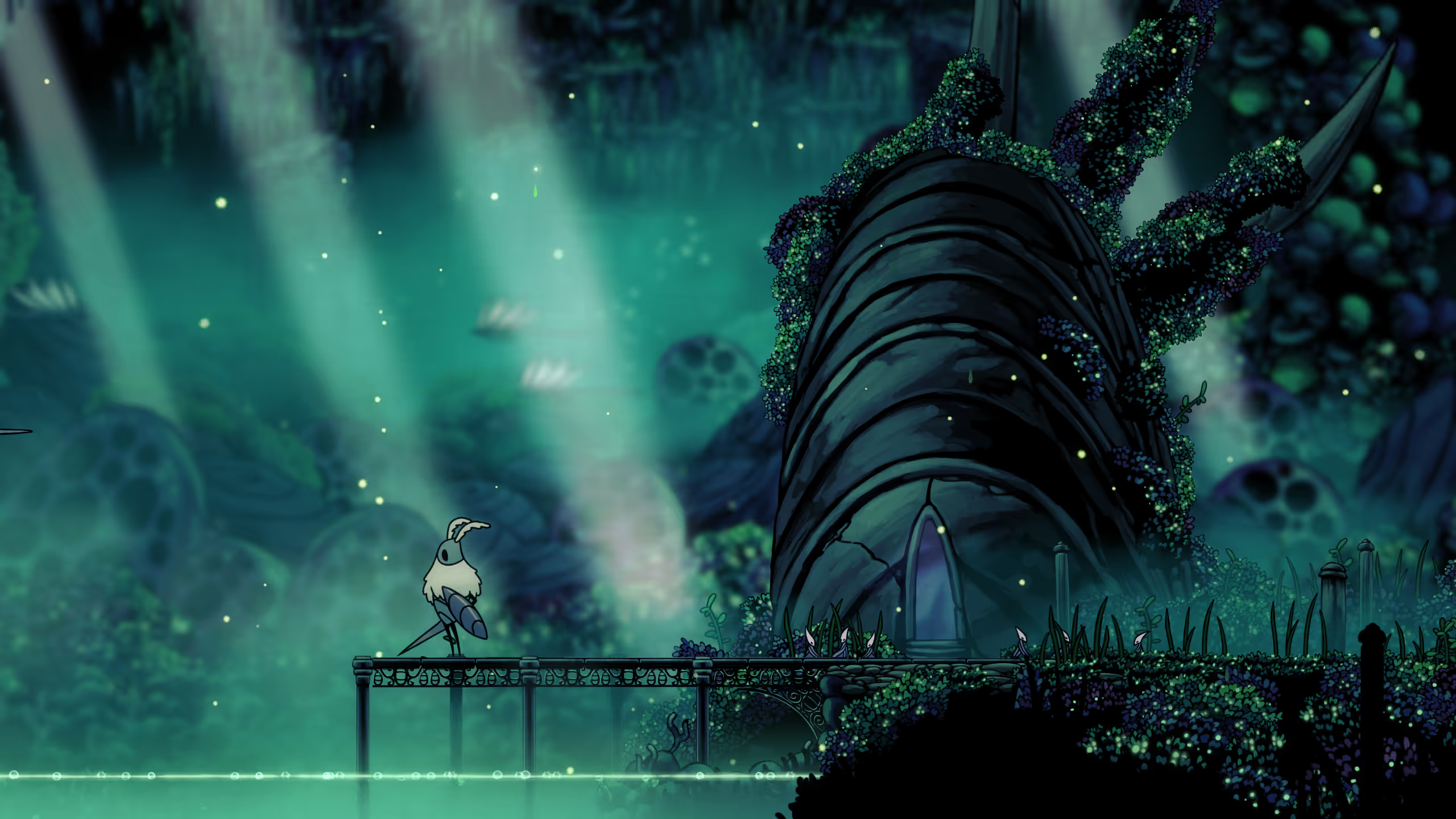
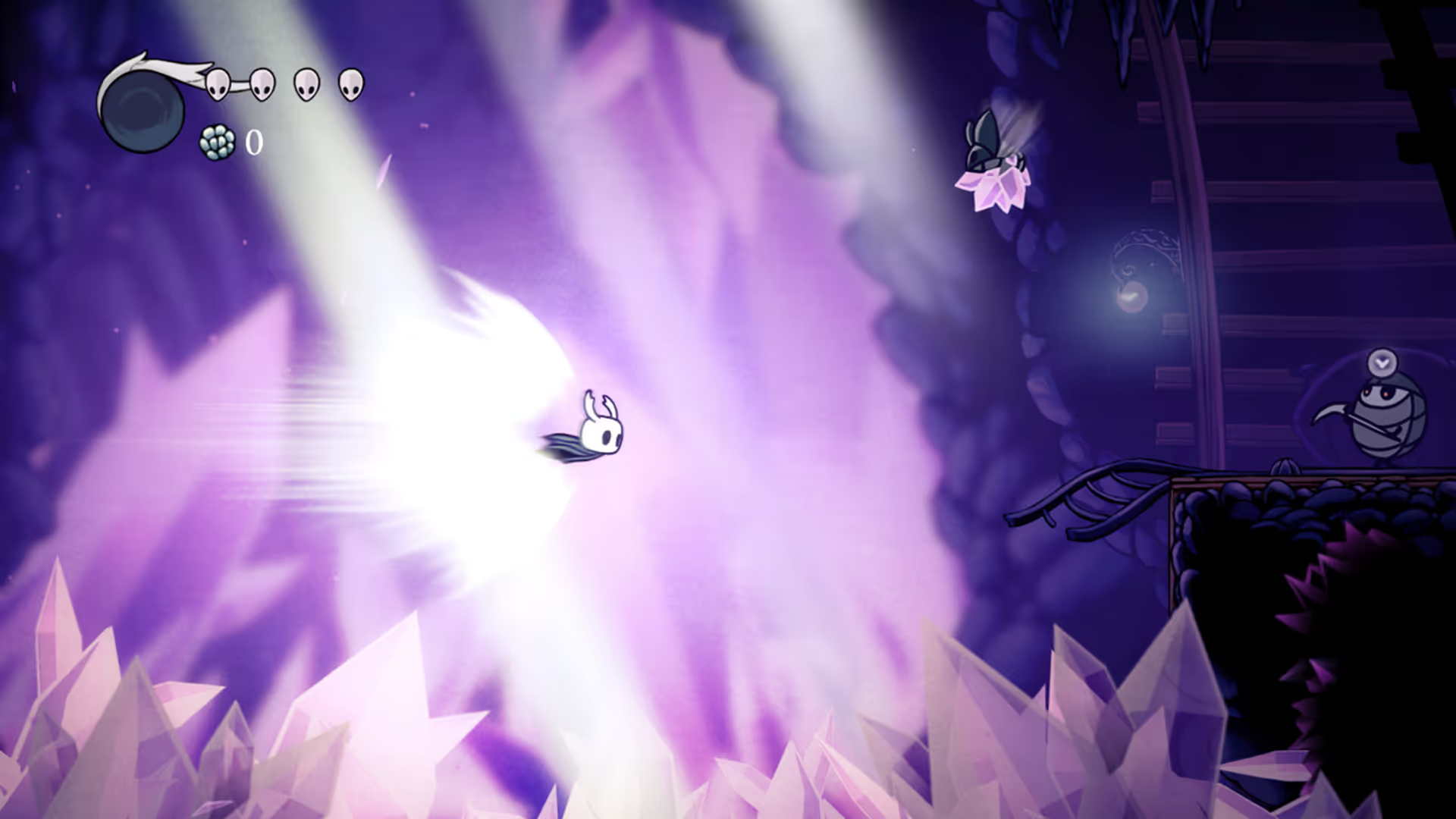
Unlike many other games on this list, Hollow Knight doesn’t do anything particularly unique. There are no ‘gimmicks’ or novel ideas. Instead, Hollow Knight borrows elements from a variety of metroidvanias preceeding it, and executes on them very, very well. The combat and movement is fluid and dynamic, the environment and worldbuilding first-class, and Christopher Larkin’s music still sits on my playlist to this day. Hollow Knight is a triumph to what video games can be, provided all the developers pour their heart and soul into it.
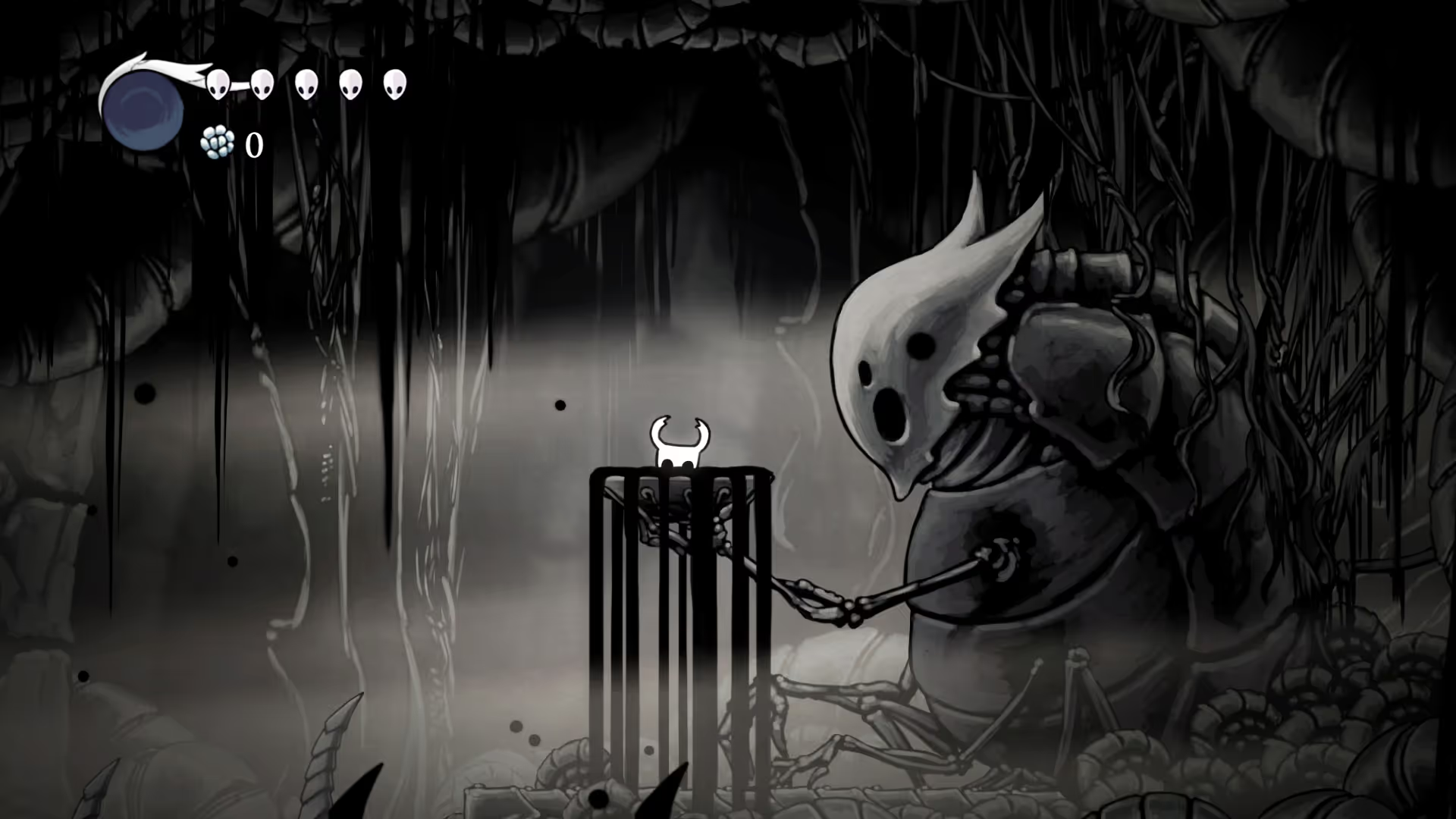
The music and environments are my favorite aspects of Hollow Knight. Entering Dirtmouth, the starting town for the first time you’re greeted with a sombre melody and rather desolate township, sporting only a single resident. You can tell that at one point at a time long past this town had many more travellers passing through and was full of activity. These sombre tones carry through the rest of the game, and Christopher Larkin’s music does a phenomenal job of emphasing those tones to the player.
I cannot emphaise how good the soundtrack for this game is enough. I truly believe that out of every game I’ve played to this day - Christopher Larkin’s composition for Hollow Knight remains the single greatest soundtrack to be composed for any video game.
Chrono Trigger & Gris
Currently I’m working on writing these sections (and polishing up/editing the above sections) - see here for an explanation on why this post isn’t finished yet.